
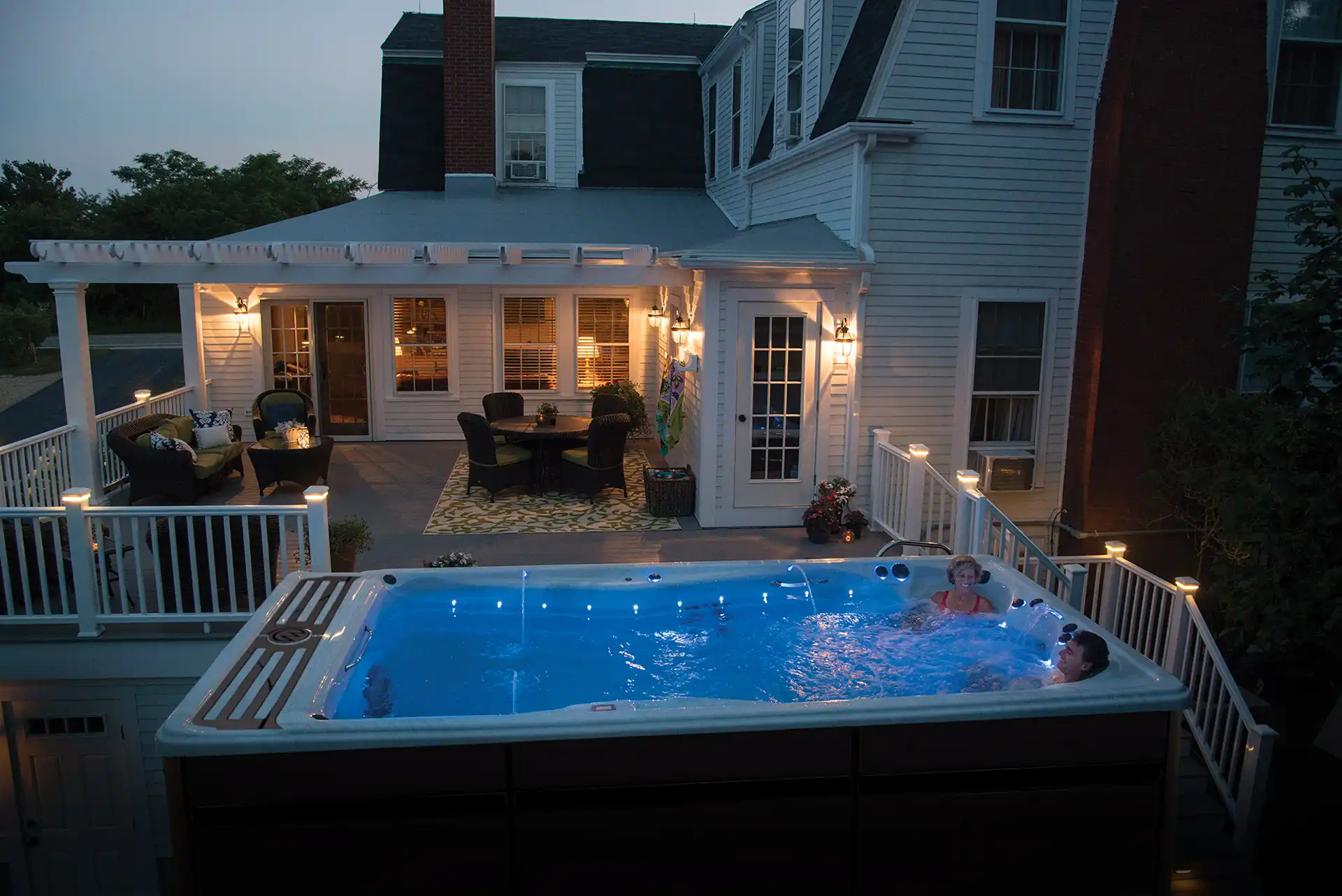
Many Long Island homeowners hesitate to buy a swim spa because of cost or uncertainty, but most who invest in one say the same thing: they wish they had done it sooner. A swim spa offers year-round use, combines fitness and relaxation, and fits into spaces where a traditional pool often cannot. The biggest regret isn’t the purchase — it’s waiting too long to make it.
If you’re asking whether swim spas are worth it, Long Island homeowners who’ve made the purchase will give you the same answer almost every time: “I wish we’d done this years ago.”
It’s not buyer’s remorse talking — it’s the opposite. Most people who buy a swim spa discover they underestimated how much they’d use it, how seamlessly it would fit into their routine, and how much value it would add to their daily life.
The regret isn’t about buying. It’s about waiting.
If you’re on the fence about a swim spa, this article breaks down what actually changes after installation, the misconceptions that keep people from pulling the trigger, and what Long Island homeowners wish they’d known before they bought.
The Most Common Reasons People Hold Off
Before diving into what changes after installation, let’s address the three hesitations we hear most often in our Farmingdale showroom:
“It’s Too Expensive”
This is the most common objection, and it’s valid. A quality swim spa is an investment, typically ranging from $15,000 to $40,000+ depending on size, features, and brand.
But here’s what most people don’t calculate: the cost of waiting. Every year you delay is another season without daily recovery, another summer without backyard fitness, and another winter without warm-water therapy for sore muscles and stress relief.
When you break down the cost over the 15–20 year lifespan of a swim spa, you’re looking at $3–5 per day for year-round use. Most Long Island homeowners spend more than that on gym memberships they rarely use.
“I Don’t Know If I’ll Use It”
This is the fear that keeps more people from buying than any other concern. Nobody wants a $25,000 lawn ornament sitting in their backyard.
The reality? Swim spa owners use their units far more than traditional pool owners. Here’s why:
- Year-round availability: Unlike pools that sit empty 8 months of the year on Long Island, swim spas are usable in January and July.
- Quick setup: No waiting for the water to warm up, no seasonal opening and closing.
- Multiple use cases: Morning swim, afternoon recovery session, evening relaxation with family.
- Weather independence: Cold night? Perfect for hydrotherapy. Hot afternoon? Turn down the temp and swim.
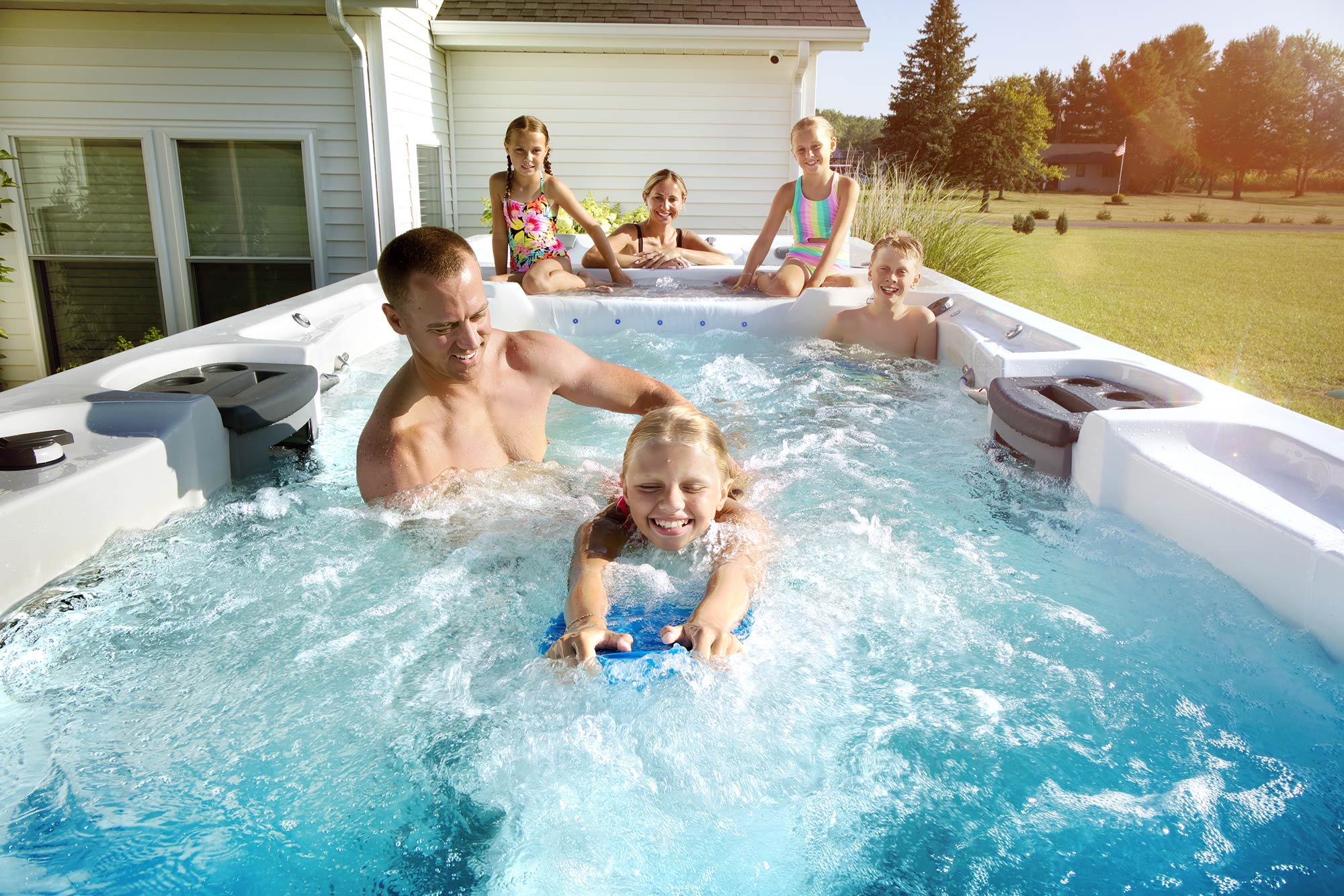
One customer told us they used their swim spa more in the first six months than they used their traditional pool in five years. That’s not an outlier — it’s the pattern we see consistently.
“I’m Not Sure It’s Big Enough”
This concern usually comes from people who’ve never experienced a swim spa’s adjustable current system. They assume you need a 25-yard lap pool to get a real workout.
The truth is that swimming against a current in a 14-foot swim spa can be more challenging and effective than lap swimming in a traditional pool. The current is adjustable, so you control the intensity. Beginners start slower, advanced swimmers crank it up.
Professional triathletes, physical therapists, and Olympic swimmers use swim spas for training and rehabilitation. If it’s good enough for them, it’s probably sufficient for your morning routine.
The Real Cost of Waiting
Let’s talk about what you’re actually giving up by delaying this decision.
Health benefits compound over time. If daily hydrotherapy helps with joint pain, back stiffness, or stress relief, every month you wait is another month without those benefits. Starting now versus next year actually matters for your long-term wellness.
Seasonal windows close fast. Most people think about swim spas in summer when they’re hot and want to cool off. But the best time to buy is fall or winter when you can use it immediately for recovery and relaxation during the coldest months. Waiting until “next summer” means missing an entire year of use.
Lifestyle changes don’t wait. Kids grow up, injuries happen, stress accumulates. The version of your life that would benefit most from a swim spa is the one you’re living right now — not the theoretical future when “timing is perfect.”
What most buyers say: “Our only regret is that we waited through 2–3 summers before finally doing this. We should have installed it the first year we talked about it.”
What Changes After People Actually Buy One
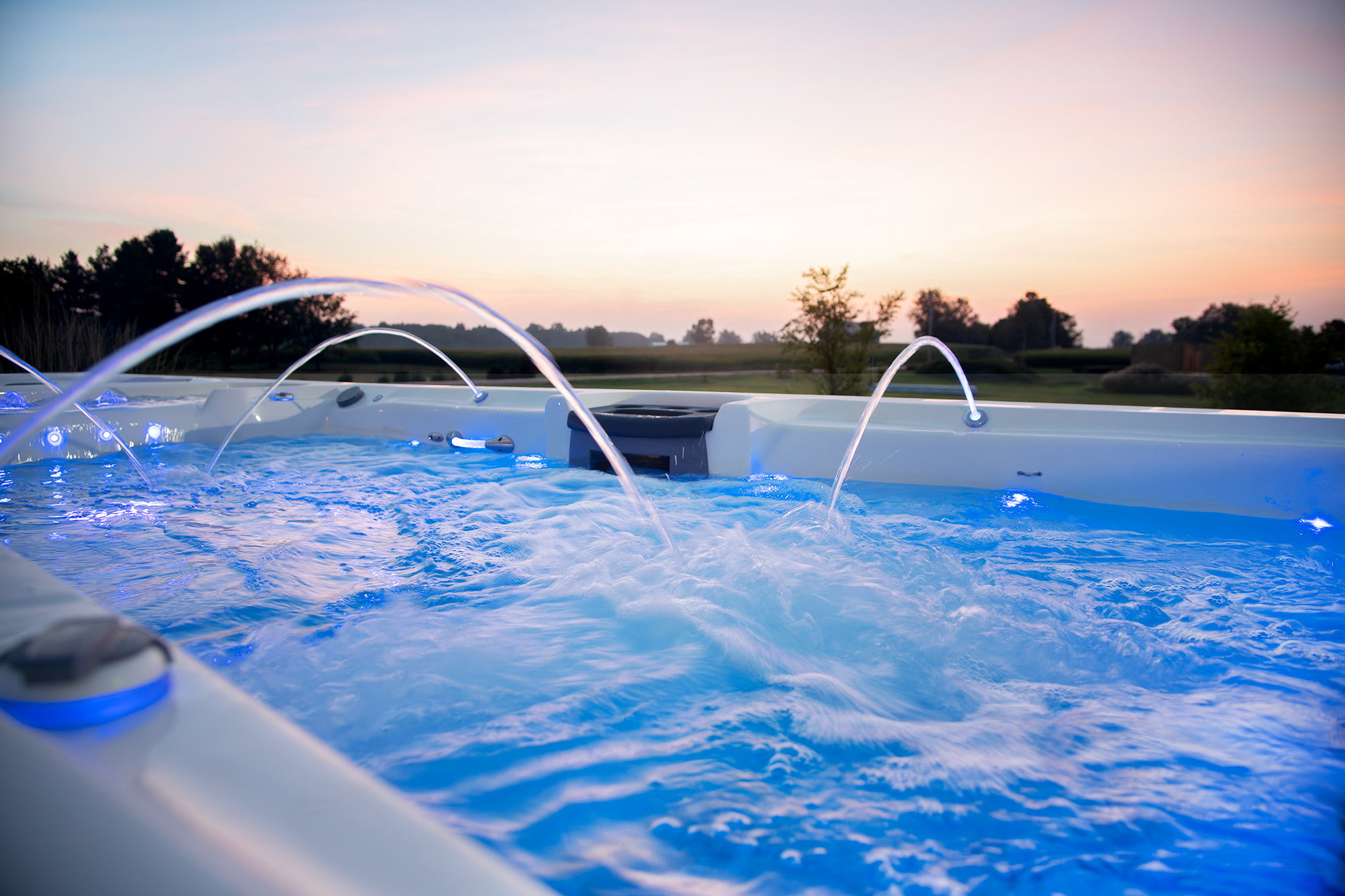
Here’s what Long Island homeowners report after their swim spa has been installed for 3–6 months:
More Frequent Use Than Expected
Most buyers assume they’ll use their swim spa 2–3 times per week. The reality is closer to 4–6 times per week, especially in the first year.
Why? Because it becomes part of the routine:
- Morning stretch and swim before work
- Post-workout recovery in the afternoon
- Evening wind-down after a stressful day
- Weekend family time without leaving the backyard
The barrier to entry is low — it’s in your backyard, it’s always ready — so usage becomes habitual instead of occasional.
Daily and Weekly Routine Integration
One of the most common surprises for new swim spa owners is how quickly it becomes a non-negotiable part of their schedule.
We’ve had customers tell us they check the weather forecast not to plan outdoor activities, but to decide whether they’re swimming in the morning or evening. It shifts from “nice to have” to “part of how I start or end my day.”
This is especially true for people with physically demanding jobs, chronic pain, or high-stress careers. The swim spa becomes a tool, not a luxury.
Health and Lifestyle Improvement
The mental health benefits often surprise people more than the physical ones. Yes, the hydrotherapy helps with muscle recovery and joint pain. But the stress relief, sleep improvement, and daily decompression routine are what people talk about most.
Long Island homeowners consistently report:
- Better sleep quality (especially when using the spa in the evening)
- Reduced reliance on over-the-counter pain relievers for chronic aches
- More family time at home instead of driving to pools or gyms
- Increased motivation to stay active year-round
One customer, a Nassau County business owner, said he stopped taking his usual evening ibuprofen for back pain after two weeks of nightly hydrotherapy sessions. Another told us his kids started inviting friends over more often because “our backyard is the coolest spot in the neighborhood.”
The Biggest Misconceptions About Swim Spas
Let’s clear up the three myths that keep people from seriously considering a swim spa:
“You Can’t Really Swim in Them”
This is the most persistent misconception, and it’s completely wrong.
Swim spas use powerful, adjustable current systems that create resistance equivalent to swimming in open water. The current doesn’t push you backward — it creates a flow you swim against, similar to a treadmill for running.
Here’s what that means in practice:
- Beginners can set a gentle current and work on form.
- Intermediate swimmers can increase resistance for endurance training.
- Advanced athletes can crank it to maximum for sprint intervals.
The key difference from lap swimming is that you’re not turning every 25 yards. You swim continuously in place, which many people find more effective for cardiovascular conditioning and stroke development.
Physical therapists and swim coaches use these systems regularly. If they trust them for rehabilitation and training, they’re legitimate fitness tools.
“They’re Just Oversized Hot Tubs”
This is like saying a truck is just an oversized car. Technically similar, but built for completely different purposes.
Hot tubs are designed for relaxation and hydrotherapy. They have jets positioned for massage, seating for lounging, and are typically maintained at 100–104°F.
Swim spas have:
- Powerful propulsion systems for swimming and aquatic exercise
- Larger footprints (typically 12–17 feet long vs. 6–8 feet for hot tubs)
- Adjustable temperature ranges (can be cooled to 60–70°F for summer swimming or heated to 90–100°F for winter therapy)
- Dual-zone options with separate swim and spa sections
Many swim spas do include hot tub-style seating and jets, but the primary design purpose is aquatic fitness and year-round swimming. It’s a different category entirely.
“They’re Hard to Maintain”
People assume swim spas require the same intensive maintenance as traditional pools. They don’t.
A swim spa holds 1,500–2,500 gallons of water. A typical in-ground pool holds 15,000–30,000 gallons. Less water means less chemical balancing, less cleaning, and less hassle.
With modern filtration systems and automated water care, most owners spend 15–30 minutes per week on basic maintenance:
- Test water chemistry (2 minutes)
- Add chemicals as needed (5 minutes)
- Rinse or clean filter (10–15 minutes, once a week or bi-weekly)
- Wipe down the waterline (5 minutes)
There’s no opening and closing for the season, no winterizing, no covering and uncovering a massive pool every time you want to use it. You leave it running year-round and it’s ready whenever you are.
Compared to a traditional pool — which requires regular vacuuming, skimming, backwashing, and seasonal maintenance — swim spas are significantly easier to manage.
Why Swim Spas Make More Sense for Long Island Living
Long Island’s climate, property sizes, and lifestyle patterns make swim spas particularly well-suited for this region. Here’s why:
Seasonal Weather and Year-Round Use
Traditional pools on Long Island are usable 3–4 months per year, maybe 5 if you push it into May and September. That’s 7–8 months of dead space in your backyard.
Swim spas? 11–12 months per year, easily.
Here’s the seasonal breakdown:
- Spring (March–May): Pool too cold, swim spa perfect for morning swims and evening relaxation.
- Summer (June–August): Both work, but swim spa offers instant availability without waiting for pool temp to rise.
- Fall (September–November): Pool closing down, swim spa just getting started for hydrotherapy season.
- Winter (December–February): Pool covered and dormant, swim spa is a warm refuge after shoveling snow or dealing with cold-weather aches.
The winter use is where swim spas truly shine on Long Island. Cold weather means sore muscles, joint stiffness, and seasonal stress. A 95–100°F swim spa on a 30-degree February night isn’t just relaxing — it’s therapeutic.
One Huntington homeowner told us he uses his swim spa MORE in winter than summer because the contrast between cold air and warm water makes the experience that much more satisfying.
Property Sizes and Backyard Fit
Long Island properties, especially in Nassau County and western Suffolk, often have limited backyard space. Installing a 15×30 in-ground pool can dominate the entire yard, leaving little room for anything else.
Swim spas typically measure 12–17 feet long and 7–8 feet wide. That’s a footprint small enough to fit in most backyards without overwhelming the space.
You can place a swim spa:
- On an existing patio or deck (with proper structural support)
- In a corner of the yard, leaving room for lawn and landscaping
- Partially recessed into the ground for a semi-in-ground look
- Next to an existing pool (for year-round use when the pool is closed)
For homeowners with smaller yards who want aquatic fitness without sacrificing their entire backyard, swim spas are often the only realistic option.
Faster Installation vs. Major Construction
Installing an in-ground pool on Long Island is a multi-month project involving excavation, permits, plumbing, electrical, drainage, and landscaping restoration. Total timeline? 8–12 weeks minimum, often longer.
Swim spa installation is measured in days, not months:
- Day 1–2: Site prep (gravel base or reinforced pad)
- Day 3: Delivery and placement
- Day 4: Electrical hookup by licensed electrician
- Day 5: Fill, heat, and start using
If you decide you want a swim spa in April, you can be using it by May. No summer-long construction disruption, no months of waiting.
Who a Swim Spa Is Actually Perfect For
Based on hundreds of installations across Long Island, here are the profiles of people who get the most value from swim spas:
Busy Homeowners Who Want Convenience
If you work long hours and don’t have time to drive to a gym or pool, a swim spa in your backyard removes all friction from staying active. No commute. No locker room. No waiting for a lane. Just walk outside and start your workout or recovery session.
Fitness-Minded Buyers Who Value Low-Impact Exercise
Runners, cyclists, and athletes recovering from injuries love swim spas because they provide high-quality cardiovascular workouts without the joint impact of running or gym equipment. Aquatic exercise reduces stress on knees, hips, and ankles while building cardiovascular endurance and muscular strength. For people over 40, recovering from surgery, or managing chronic pain, swim spas offer a way to stay fit without aggravating existing issues.
People Who Want Low-Maintenance Lifestyle Upgrades
If you love the idea of a pool but dread the maintenance, chemicals, and seasonal upkeep, a swim spa is a better fit. It delivers the aquatic experience with a fraction of the maintenance burden. For retirees, busy families, and anyone who wants results without endless chores, that’s a major selling point.
What Separates a Great Swim Spa from a Regret Purchase
Not all swim spas are created equal. Here’s what to look for — and what to avoid — before you buy:
❌ Red Flags (Avoid These)
Weak or non-adjustable current systems: If you can’t dial the current up or down, you’re stuck with one intensity level. Make sure the current is adjustable and powerful enough for actual swimming.
Poor insulation: Entry-level swim spas often skimp on insulation, which means higher energy bills and difficulty maintaining temperature in winter. Look for full-foam insulation and ask about the R-value.
Distant or unresponsive dealers: If the nearest dealer is 100+ miles away or doesn’t offer local service, you’ll regret it the first time something needs repair. Local support matters for a product you’ll use year-round for 15–20 years.
No in-person testing before purchase: Buying a swim spa based on photos and specs alone is a mistake. You need to feel the jet power, test the current, and sit in the seating to know if it’s right for you.
✅ Green Flags (Prioritize These)
Adjustable, powerful current systems: Look for multi-speed pumps and adjustable flow rates. The best systems let you fine-tune resistance from beginner-friendly to professional-grade.
Commercial-grade components: Pumps, heaters, and control systems should be built for heavy, continuous use. Ask about warranty coverage and expected component lifespan.
Superior insulation and energy efficiency: Full-foam insulation, thermal covers, and efficient heating systems reduce operating costs significantly. Ask for estimated monthly energy costs based on Long Island winters.
Local dealer with service and support: A reputable local dealer means faster service, better support, and someone who understands Long Island installation requirements.
Critical insight: The difference between entry-level and premium swim spas isn’t just price — it’s how often you’ll actually use it. A cheaper unit with weak jets and poor insulation becomes a regret purchase. A quality unit you use 5 days a week for 15 years is worth every dollar.
Why Visiting a Showroom Actually Matters
You can’t understand a swim spa from photos, videos, or spec sheets. You have to experience it.
Here’s what you learn in 10 minutes at a showroom that you can’t learn online:
- Current strength: How powerful is the flow? Can you actually swim against it?
- Jet pressure and placement: Are the hydrotherapy jets strong enough for deep tissue relief?
- Seating comfort: Do the seats fit your body and work for different uses?
- Noise level: How loud are the pumps at full power?
- Control system: Is the interface intuitive or frustrating?
Most people walk into a showroom thinking they know what they want. After testing 2–3 models, they realize the size, current strength, or features they thought they needed are different from what actually works for their goals.
Most people don’t fully understand a swim spa until they see one in person. Visit our Farmingdale showroom and experience the difference for yourself.
Schedule Your Showroom VisitFinal Thoughts: Why the Regret Is Waiting, Not Buying
If you take one thing away from this article, it should be this: the people who regret their swim spa purchase are a tiny minority. The vast majority of swim spa owners say they wish they’d bought one sooner. So are swim spas worth it? For the overwhelming majority of Long Island homeowners, the answer is yes — and the only real regret is waiting.
The reasons for hesitation are understandable. Cost, uncertainty, and fear of making the wrong choice are legitimate concerns. But those concerns rarely play out the way people expect.
Most swim spa buyers discover they use it more than anticipated, integrate it into their daily routine faster than expected, and gain more value — health, lifestyle, family time — than they projected.
The real cost isn’t the purchase price. It’s the years you spend without the benefits because you’re waiting for the “perfect time” that never comes.
If a swim spa makes sense for your lifestyle, your backyard, and your goals, the best time to buy is now. The second-best time is next season. The worst time is “someday.”
Ready to see what Long Island homeowners are talking about? Visit our Farmingdale showroom and test the swim spas yourself. You’ll understand in 10 minutes what takes months to explain online.
Book Your Showroom Visit